Covid-19 effects education
Education is the fundamental human right and also an enabling human right which leads to the realization of all the other human rights. It is a global common-sense which is inscribed as the fourth of the Sustainable Development Goals.
This health crisis however has caused the largest disruption of the provision of education this year globally. It is exacerbating pre-existing education disparities especially in developing countries with fragile education systems as it reduces the opportunities for many learners especially those living in the dregs of the society.
Therefore, it is the onus of every stakeholder (governments, tertiary institutions and private sectors) to put effort in means of mitigating the potential devastating consequences of the pandemic on the educational sector.
Some developing nations such as ours before the pandemic were already facing formidable challenges of fulfilling the promise of education as they experienced lapses in financing education such as the provision of local and international scholarships.
Some training systems suffer vulnerabilities such as low levels of digitalization and long-standing structural weaknesses.
The pandemic has indeed been a hard pill for most education institutions to swallow especially in trying to manoeuvre in the challenge of the pandemic.
We have seen education institutions adapting and implementing online learning after the pandemic caught them off-guard.
Higher institutions of learning for example are already grappling with digital learning which has been partial implemented before the pandemic. This e-learning has taken the use of recorded lectures, the use of Moodle and online platforms such as Google and Zoom Meet.
On the same peril, some have postponed learning and teaching until further notice as a result of lack of information technology infrastructure for both students and educators.
Some institutions are also stuck in harmonizing semesters and academic calendars because some courses and programmes can been successfully implemented online while the opposite is also true especially for practical courses.
This digitalisation of education has led to some vulnerability among learners. Vulnerable learners are largely those who have poor digital skills, and those with minimal access to the hardware and connectivity required for digital learning. Those with a weak financial muscle are also not an exception.
So learning in the advent of this health crisis qualifies to be an utmost priority of every education institution in terms learners support and comprehension of some challenges so to easily manoeuvre through.
MAJOR THREATS OF E-LEARNING
Digital learning may seem a glamorous alternative to redeem lost classroom environment, but it requires that every stakeholder is hands on. Poor education delivery to learners does not only threaten the students’ academic performance, but cast some doubts on the standard of education provided during this period of the pandemic.
There are relatively few colleges and universities monitoring the effective reach and use of digital learning to the benefit of the learner. There exists a digital divide among learners. The less privileged students are having limited access to basic household services such as electricity, lack of technology infrastructure and poor network connectivity and thus disadvantaged in terms of these virtually classrooms.
A low level of digital literacy is a cut across problem among learners and lecturers. For instance, educators were tasked with implementing digital learning modalities without sufficient training, guidance, or resources. Most of these learners and lecturers can attest that they are still unprepared for the continued digital learning and its methodologies.
The closure of institutions of learning have also necessitated the way students are accessed and evaluated for progress to next academic year or semester. Most colleges and universities have cancelled exams and replaced them with continuous assessment. This means that they are no longer concerned about imparting basic knowledge of the modules to learners but concerned about finishing academic years.
The contexts of adequate infrastructure and connectivity stills remain a major concern too. The lack of information communication skills by lecturers means that they will struggle with their on-going profession development and facilitating quality digital learning. For the learner, it means a total academic chaos as their shortcomings in mastery of ICT is likely to cost them marks.
LATEST DEVELOPMENTS
As COVID 19 curve flattens, governments have begun to loosen certain mandates of the pandemic which has led to some education institutions re-opening under strict COVID 19 compliance rules. But some institutions are adamant to re-opening fearing a second wave of the pandemic.
Some colleges and universities to the surprise learners have rolled out examinations. It stills remains something to ponder on whether the course outlines were finished not to mention the effectiveness of digital learning as early highlighted above.
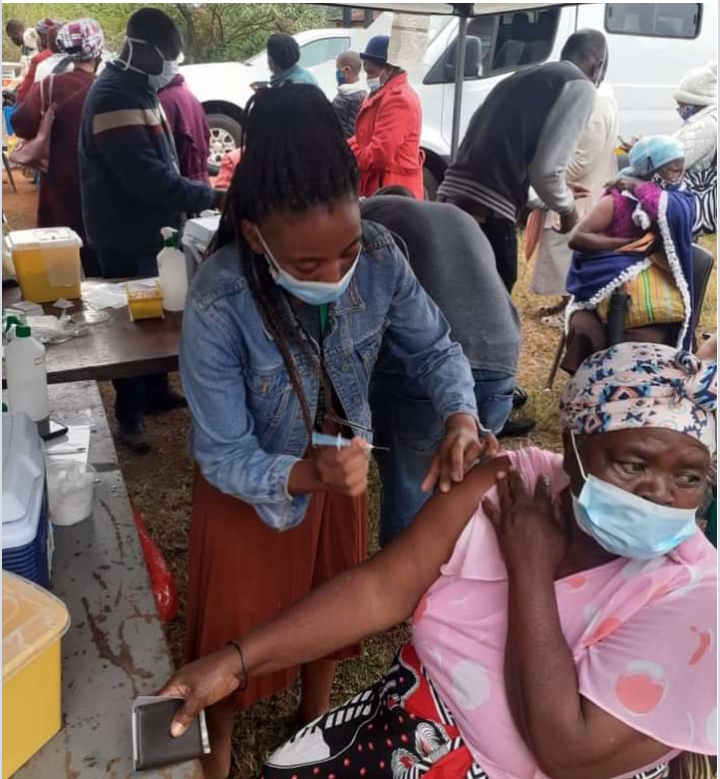
COVID-19 VACCINATIONS: ESWATINI MISS WHO TARGET World…
COVID-19 VACCINATIONS: ESWATINI MISS WHO TARGET World Health Organisation (WHO) wanted each country to administer vaccines in atleast 40% of its population by the end December last year.This target has been however missed by most African countries with Eswatini not being spared as only 7 out of 54 countries in the content met the target. […]
COVID-19 VACCINATIONS: ESWATINI MISS WHO TARGET World…
 EswatiniDaily